

Have you ever found yourself staring at a counselling website, cursor hovering over the “Book Now” button, only to close the tab because you thought, “My problems aren’t bad enough”?
Maybe you aren’t going through a massive life upheaval or a deep mental health crisis. Maybe, on paper, your life is actually going pretty well. Yet, you still feel a bit stuck, disconnected, or curious about why you react to stress the way you do.
There is a common myth that therapy is an emergency room for the soul, a place you only go when everything is actively falling apart. But the truth is, therapy is just as much about mental health maintenance and personal growth as it is about crisis management. You don’t need to be broken to want to grow.
In this article, we’ll explore why seeking mental health support is a powerful tool for everyday life, how proactive counselling works, and how you can access affordable counselling that fits your life and budget.
Moving Beyond the “Crisis Only” Mindset
We don’t wait for our teeth to fall out before we visit the dentist, and we don’t wait for our car engine to catch fire before getting an oil change. Yet, when it comes to our minds, we often feel we have to reach absolute rock bottom before we are “allowed” to ask for help.
Waiting for a crisis to seek therapy is exhausting. When you are in the middle of a storm, it is incredibly hard to learn new coping mechanisms because you are simply trying to survive.
By contrast, going to therapy when life is relatively stable gives you the breathing room to do deep, meaningful work. It allows you to build a sturdy foundation before the next storm hits.
The Benefits of Proactive Therapy
Self-Awareness: Understanding your behavioural patterns, triggers, and why you think the way you do.
Better Boundaries: Learning how to say “no” without guilt and protecting your emotional energy.
Improved Relationships: Discovering how to communicate your needs clearly and empathetically to partners, family, and co-workers.
Stress Resilience: Developing practical tools to handle everyday anxieties before they snowball into burnout.
What Does “Therapy for Personal Growth” Actually Look Like?
If you aren’t there to fix a specific, urgent crisis, what do you actually talk about in a session? Personal growth therapy is entirely collaborative and driven by your unique curiosity about yourself. It’s a dedicated hour every week or two focused entirely on your development. Here are a few things you might explore:
1. Navigating Life Transitions
Even positive changes, like starting a new job, moving to a new city, or getting into a serious relationship, bring stress and identity shifts. A therapist can help you navigate these transitions with grace and clarity.
2. Unpacking “Micro-Stresses”
Sometimes it’s not one big trauma, but the slow accumulation of daily micro-stresses that wears us down. Therapy gives you a space to detangle the mental clutter of everyday life.
3. Breaking Old Habits
Do you find yourself people-pleasing? Procrastinating? Overthinking minor interactions? Therapy helps you gently look under the hood of these habits and consciously choose how you want to show up in the world.
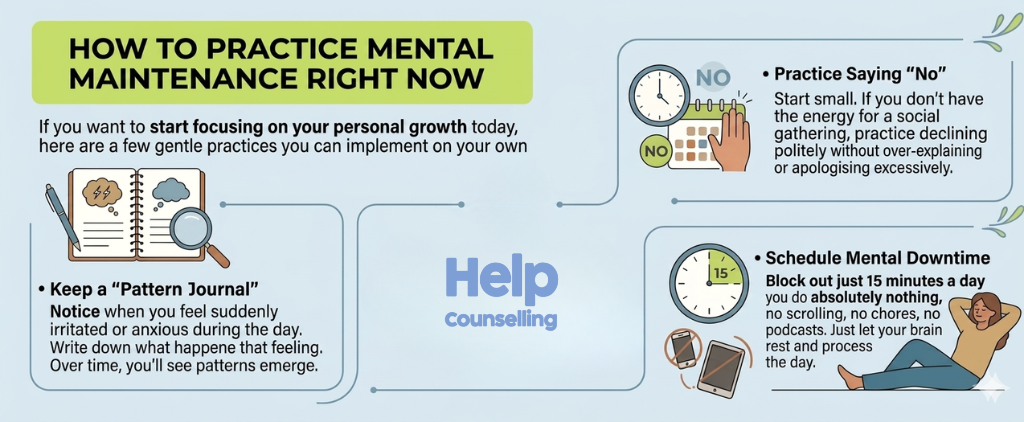
You Deserve Space to Grow
You don’t have to wait until you are overwhelmed, exhausted, or at your breaking point to prioritise your well-being. Investing in your mental health today is the greatest gift you can give to your future self.
If you are ready to explore what therapy can do for your everyday peace of mind, we are here to welcome you.
Ready to take the next step? Click here to learn more about our low-cost counselling services or book an initial, confidential consultation with one of our friendly team members today. Let’s build a healthier, more grounded tomorrow, together.